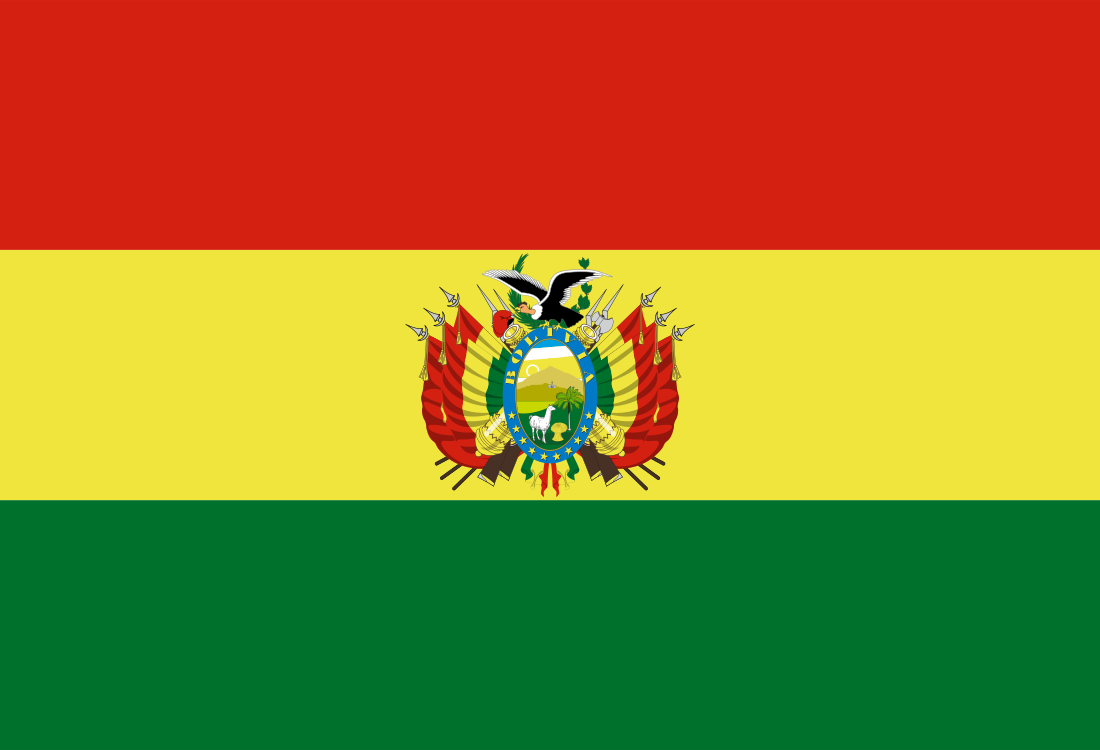
Bolivia
Plurinational State of Bolivia · South America
Bolivia is a country in South America, with Sucre as its capital, home to about 12,581,843 people. Bolivia shares land borders with 5 countries, listed below alongside its flag, currency, calling code and ISO codes.
| Capital | Sucre |
|---|---|
| Region | South America |
| Currency | Bolivian boliviano (BOB Bs.) |
| Calling code | +591 |
| ISO codes | BO / BOL / 068 ISO 3166-1 |
| Flag emoji | 🇧🇴 |
| Population | 12,581,843 (2025) World Bank |
| Area | 1,098,581 km² |
| Languages | Aymara, Guaraní, Quechua, Spanish |
| Internet domain | .bo |
| Demonym | Bolivian |
Bordering countries
What does the flag of Bolivia mean?
Bolivia's red, yellow and green tricolour was adopted on 31 October 1851 under President Manuel Isidoro Belzu, and an 1888 supreme decree under President Gregorio Pacheco first put the meanings on record: red for the blood shed by the country's heroes for the birth and preservation of the republic, yellow for its wealth and resources, and green for the richness of its natural areas as well as for hope. The state and war flag carries the coat of arms in the centre; the civil flag is the three plain bands. Since the revised 2009 constitution the Wiphala, the square rainbow-chequered banner of the Andean peoples, has been a national symbol in its own right and flies alongside the tricolour on government buildings. Landlocked Bolivia also maintains a naval ensign, used by its navy on rivers and lakes.
Source: Wikipedia: Flag of Bolivia
About Bolivia
Bolivia, officially Plurinational State of Bolivia, is a United Nations member state in South America. Its capital and seat of government is Sucre. It is landlocked, sharing all of its borders with neighbouring countries and no coastline. The official currency is the Bolivian boliviano (Bs.), using the code BOB.
Curious about the city itself? See what is the capital of Bolivia for Sucre’s own facts and history.
To call Bolivia from abroad, dial the country code +591. In international standards it is identified by the ISO 3166-1 codes BO (alpha-2) and BOL (alpha-3), which appear in everything from web addresses to shipping labels. As of 2025, its population is around 12,581,843.
Frequently asked questions
What is the capital of Bolivia?
What currency does Bolivia use?
What is the country calling code for Bolivia?
What are the ISO codes for Bolivia?
What is the flag emoji for Bolivia?
What do the colors on the flag of Bolivia mean?
How Bolivia compares
- Area: 1,098,581 km², ranking 27 of 194 sovereign states by land area.
- Population: 12,581,843, ranking 78 of 193 sovereign states.
- Density: about 11 people per square kilometre.
- Land borders: 5, against an average of 4.1 across the sovereign states that have any.
Flags with the same colours as Bolivia
9 other national flags use exactly the same set of colour families (red, yellow, green). Similar colours are the most common reason flags get mistaken for one another, though colour alone says nothing about layout.
Bolivia appears in these lists
Population from the World Bank (SP.POP.TOTL); flag, capital, currency, calling code and ISO data from open datasets. Rankings, density and flag colour matches are computed from that same dataset. Full sources and vintage on the data page. Last updated . Report a correction.