What is the capital of China?
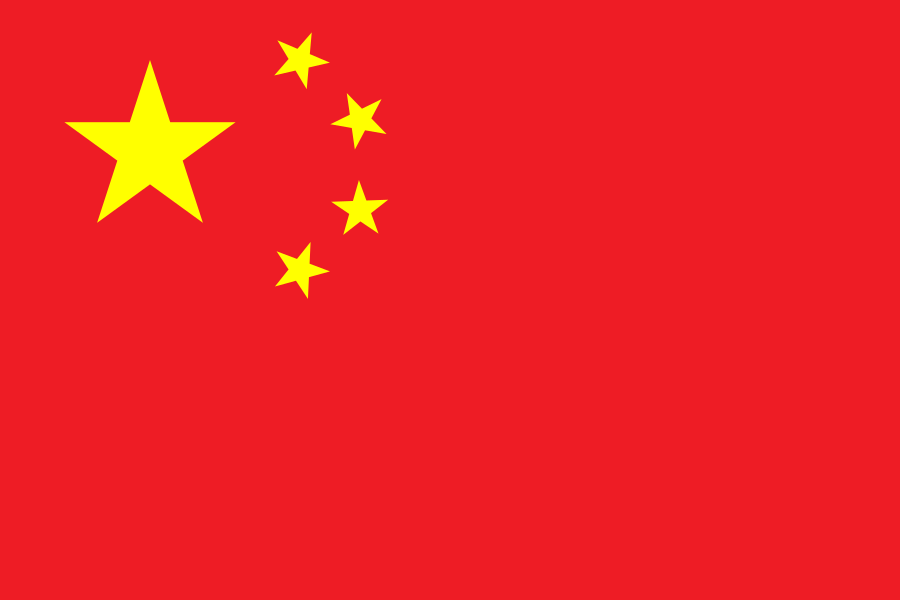
Beijing sits on the North China Plain, ringed by mountains on three sides, in the north of the country.
Beijing is the capital and seat of government of China, a role it has held since 1949. China itself has an estimated population of 1,406,585,000 (2025).
Beijing is not the largest city in China. That is Shanghai, which makes China one of the countries whose capital is not their biggest city.
Beijing at a glance
| City population | 21,893,095 (2020 census) |
|---|---|
| Country | 🇨🇳 China |
| Capital since | 1949 |
| Largest city in China | Shanghai |
| Time zone | UTC+08:00 (CST) |
| Currency | Chinese yuan (CNY) |
About Beijing
Beijing has been the capital of China since 1949, when it became the capital of the People's Republic of China; it had also been the imperial capital under the Ming and Qing dynasties from 1420.
Beijing is China's second-largest city; Shanghai, on the east coast, has a larger urban population.
It has been an imperial or national capital for much of the last 600 years, and its historic core includes the Forbidden City and Tiananmen Square.
City facts sourced from Wikipedia: Beijing.
Frequently asked questions
What is the capital of China?
Is Beijing the largest city in China?
What is the population of Beijing?
Where is Beijing located?
When did Beijing become the capital of China?
What time zone is Beijing in?
What currency is used in Beijing?
Capitals of neighbouring countries
See the full profile of China on its country page, or browse every capital city.
Capital and country data from open datasets; city and metropolitan populations are hand-curated per city and cited where they are shown. Populations of countries come from the World Bank (SP.POP.TOTL). Full sources and vintage on the data page. Last updated . Report a correction.