What is the capital of Afghanistan?
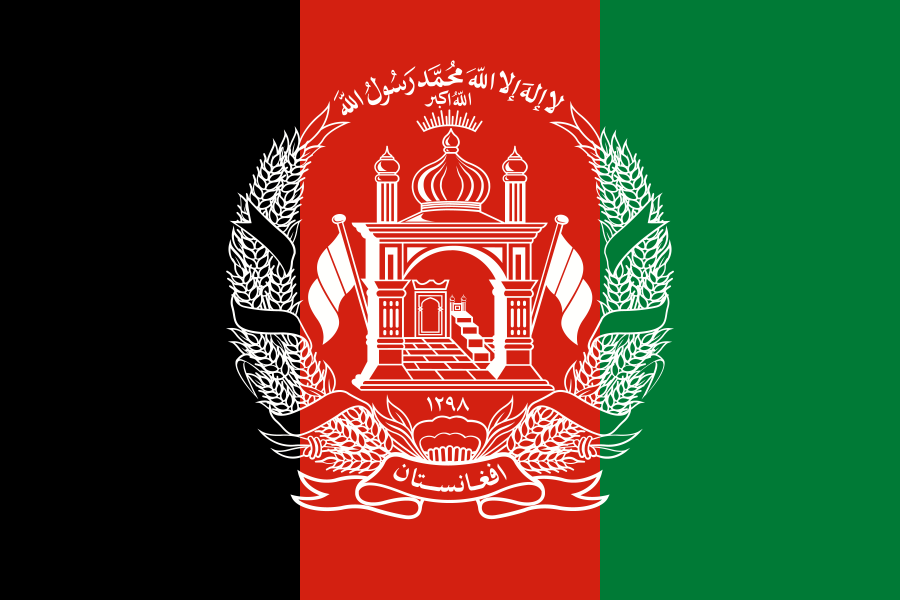
Kabul lies in a narrow valley of the Hindu Kush along the Kabul River, at about 1,790 metres above sea level, making it one of the highest national capitals in the world.
Kabul is the capital and seat of government of Afghanistan, a role it has held since 1776. Afghanistan itself has an estimated population of 43,844,111 (2025).
Kabul is also the largest city in Afghanistan, which is the usual arrangement, though it is far from universal: see the countries where capital and largest city differ.
Kabul at a glance
| City population | 5,333,284 (2025 estimate) |
|---|---|
| Country | 🇦🇫 Afghanistan |
| Capital since | 1776 |
| Largest city in Afghanistan | Kabul |
| Time zone | UTC+04:30 (AFT) |
| Currency | Afghan afghani (AFN) |
About Kabul
Kabul has been the capital of Afghanistan since 1776, when Timur Shah Durrani moved the Afghan capital there from Kandahar.
Kandahar was the capital of the Durrani Empire before the seat of power moved to Kabul in 1776.
Kabul is by far Afghanistan's largest city and its economic and political centre.
Afghanistan keeps an unusual time zone of UTC+04:30, offset half an hour from most of its neighbours.
City facts sourced from Wikipedia: Kabul.
Frequently asked questions
What is the capital of Afghanistan?
Is Kabul the largest city in Afghanistan?
What is the population of Kabul?
Where is Kabul located?
When did Kabul become the capital of Afghanistan?
What was the capital of Afghanistan before Kabul?
What time zone is Kabul in?
What currency is used in Kabul?
Capitals of neighbouring countries
See the full profile of Afghanistan on its country page, or browse every capital city.
Capital and country data from open datasets; city and metropolitan populations are hand-curated per city and cited where they are shown. Populations of countries come from the World Bank (SP.POP.TOTL). Full sources and vintage on the data page. Last updated . Report a correction.