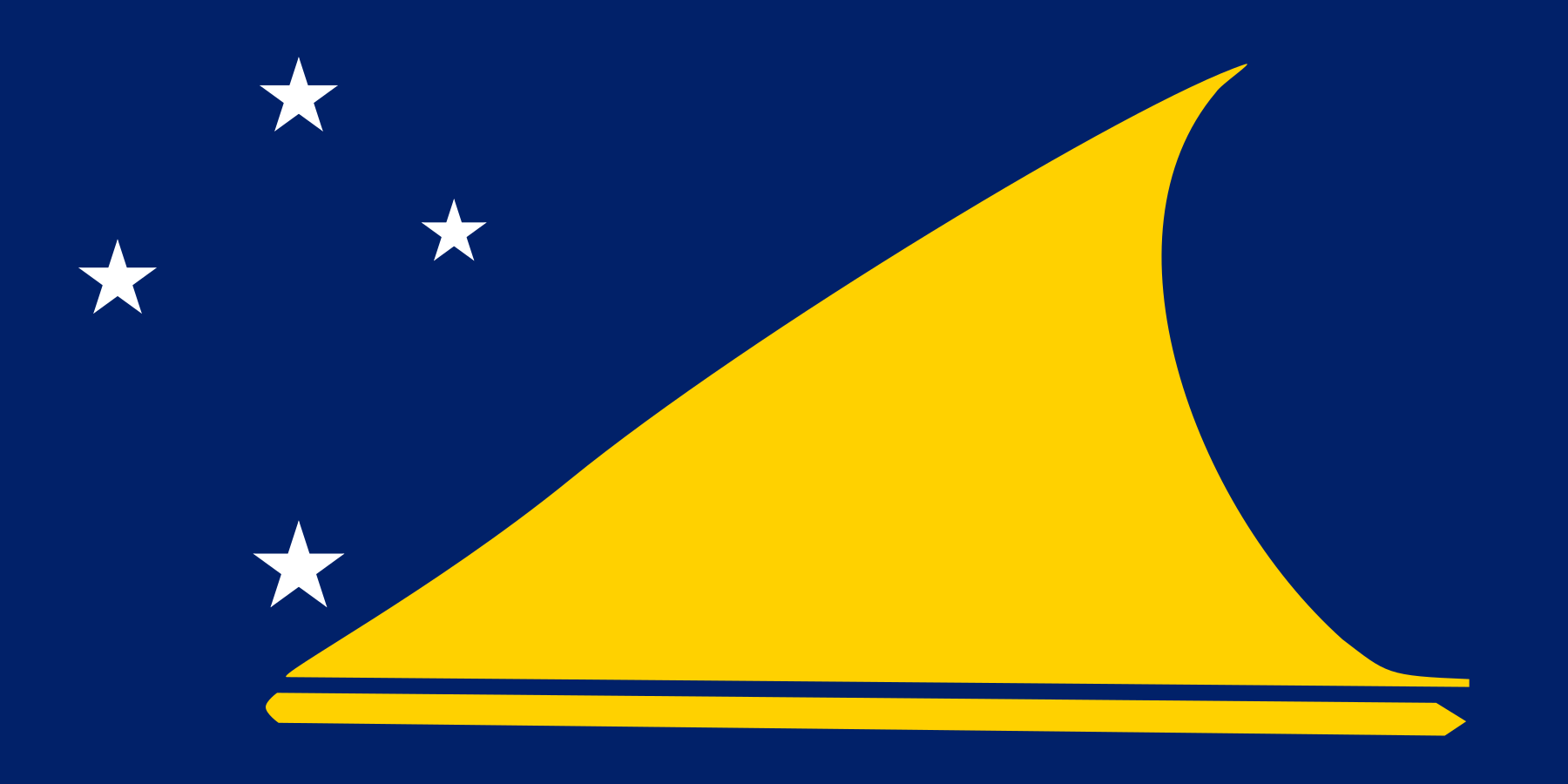
Tokelau
Tokelau · Polynesia
Tokelau is a territory in Polynesia, with Fakaofo as its capital. Tokelau shares no land border with any other country.
| Capital | Fakaofo |
|---|---|
| Region | Polynesia |
| Currency | New Zealand dollar (NZD $) |
| Calling code | +690 |
| ISO codes | TK / TKL / 772 ISO 3166-1 |
| Flag emoji | 🇹🇰 |
| Area | 12 km² |
| Languages | English, Samoan, Tokelauan |
| Internet domain | .tk |
| Demonym | Tokelauan |
About Tokelau
Tokelau is a dependency or territory in Polynesia. Its capital and seat of government is Fakaofo. It has no land borders. The official currency is the New Zealand dollar ($), using the code NZD.
To call Tokelau from abroad, dial the country code +690. In international standards it is identified by the ISO 3166-1 codes TK (alpha-2) and TKL (alpha-3), which appear in everything from web addresses to shipping labels.
Frequently asked questions
What is the capital of Tokelau?
What currency does Tokelau use?
What is the country calling code for Tokelau?
What are the ISO codes for Tokelau?
What is the flag emoji for Tokelau?
Why Tokelau has its own code
ISO 3166-1 assigns codes to territories as well as to sovereign states, because the codes are used for shipping, banking, internet domains, statistics and data exchange rather than as a statement about statehood. That is why this territory appears in country dropdowns, address forms and datasets alongside places many times its size.
Tokelau holds the alpha-2 code TK, the alpha-3 code TKL, the numeric code 772 and the internet domain .tk. The World Bank does not publish a separate population figure for it, so this page shows none rather than an estimate. Calls are routed through the code +690.
Flags with the same colours as Tokelau
7 other national flags use exactly the same set of colour families (yellow, blue). Similar colours are the most common reason flags get mistaken for one another, though colour alone says nothing about layout.
Population from the World Bank (SP.POP.TOTL); flag, capital, currency, calling code and ISO data from open datasets. Rankings, density and flag colour matches are computed from that same dataset. Full sources and vintage on the data page. Last updated . Report a correction.