What is the capital of Serbia?
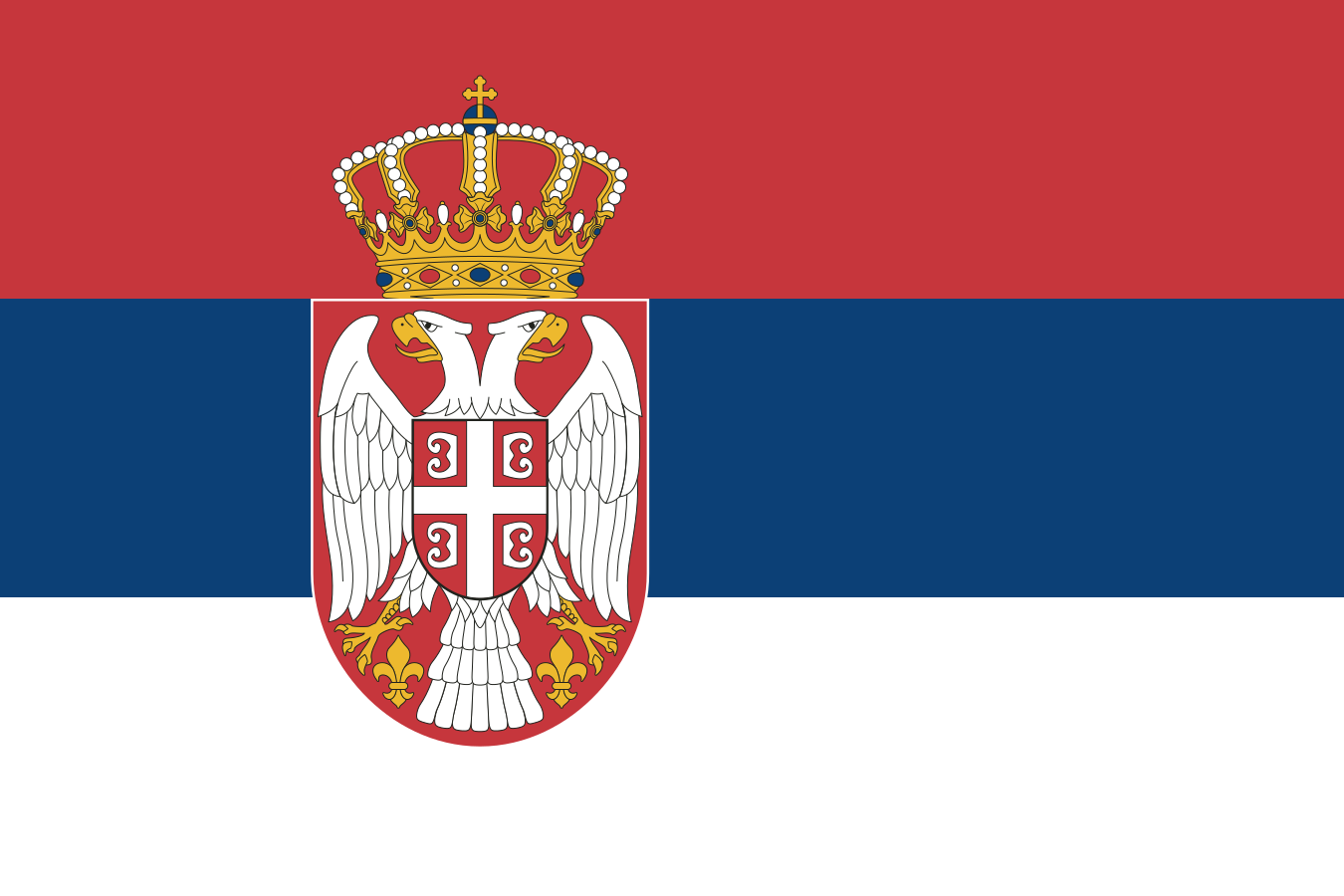
Belgrade stands at the confluence of the Sava and the Danube, at the crossroads of the Pannonian Plain and the Balkan Peninsula, about 117 metres above sea level.
Belgrade is the capital and seat of government of Serbia. Serbia itself has an estimated population of 6,549,143 (2025).
Belgrade is also the largest city in Serbia, which is the usual arrangement, though it is far from universal: see the countries where capital and largest city differ.
Belgrade at a glance
| City population | 1,197,114 (2022 census) |
|---|---|
| Metropolitan area | 1,682,720 (2022 census, administrative area) |
| Pronunciation | bel-GRAYD |
| Country | 🇷🇸 Serbia |
| Founded | before 279 BC |
| Largest city in Serbia | Belgrade |
| Time zone | UTC+01:00 (CET) |
| Currency | Serbian dinar (RSD) |
About Belgrade
The settlement existed before 279 BC and was later the Roman town of Singidunum.
Belgrade is one of the oldest continuously inhabited cities in Europe.
It is the third-most populous city on the Danube and one of the major cities of south-eastern Europe.
The Serbian name Beograd literally means 'white city'.
City facts sourced from Wikipedia: Belgrade.
Frequently asked questions
What is the capital of Serbia?
Is Belgrade the largest city in Serbia?
What is the population of Belgrade?
Where is Belgrade located?
How do you pronounce Belgrade?
What time zone is Belgrade in?
What currency is used in Belgrade?
Capitals of neighbouring countries
See the full profile of Serbia on its country page, or browse every capital city.
Capital and country data from open datasets; city and metropolitan populations are hand-curated per city and cited where they are shown. Populations of countries come from the World Bank (SP.POP.TOTL). Full sources and vintage on the data page. Last updated . Report a correction.