What is the capital of Uganda?
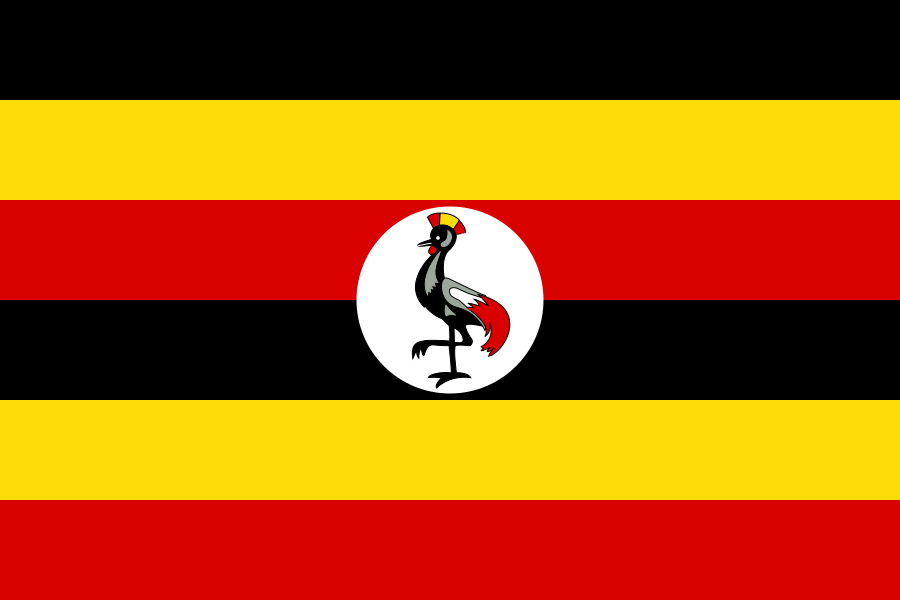
Kampala sits at about 1,200 metres above sea level in southern Uganda, and the city proper is split into five political divisions: Kampala Central, Kawempe, Makindye, Nakawa and Rubaga.
Kampala is the capital and seat of government of Uganda. Uganda itself has an estimated population of 51,384,894 (2025).
Kampala is also the largest city in Uganda, which is the usual arrangement, though it is far from universal: see the countries where capital and largest city differ.
Kampala at a glance
| City population | 1,797,722 (2024 census) |
|---|---|
| Country | 🇺🇬 Uganda |
| Largest city in Uganda | Kampala |
| Time zone | UTC+03:00 (EAT) |
| Currency | Ugandan shilling (UGX) |
About Kampala
The Kampala metropolitan area takes in the neighbouring districts of Wakiso, Mukono, Mpigi, Buikwe and Luweero. Estimates of its size vary a lot, from around four million people to 6.7 million in 2019.
In 2015 that metropolitan area generated an estimated nominal GDP of 13.8 billion US dollars, more than half of Uganda's output for the year.
City facts sourced from Wikipedia: Kampala.
Frequently asked questions
What is the capital of Uganda?
Is Kampala the largest city in Uganda?
What is the population of Kampala?
Where is Kampala located?
What time zone is Kampala in?
What currency is used in Kampala?
Capitals of neighbouring countries
See the full profile of Uganda on its country page, or browse every capital city.
Capital and country data from open datasets; city and metropolitan populations are hand-curated per city and cited where they are shown. Populations of countries come from the World Bank (SP.POP.TOTL). Full sources and vintage on the data page. Last updated . Report a correction.