What is the capital of Philippines?
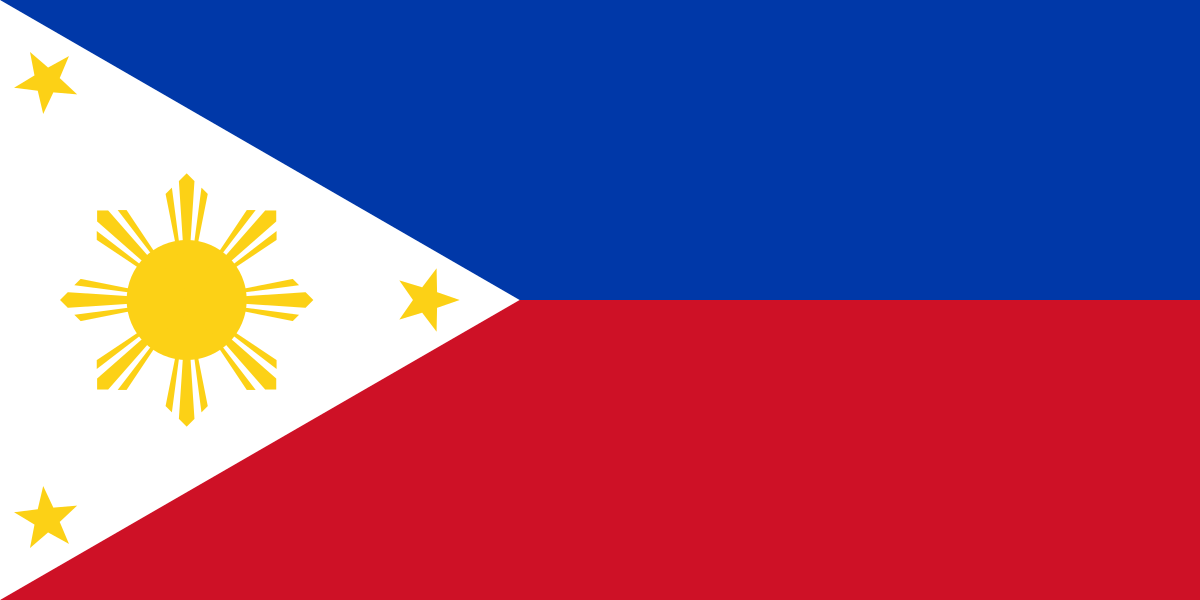
Manila sits on the eastern shore of Manila Bay on the island of Luzon, at the mouth of the Pasig river, which divides the city in two.
Manila is the capital and seat of government of Philippines, a role it has held since 1976. Philippines itself has an estimated population of 116,786,962 (2025).
Manila is not the largest city in Philippines. That is Quezon City, which makes Philippines one of the countries whose capital is not their biggest city.
Manila at a glance
| City population | 1,902,590 (2024) |
|---|---|
| Country | 🇵🇭 Philippines |
| Founded | 1571 |
| Capital since | 1976 |
| Largest city in Philippines | Quezon City |
| Time zone | UTC+08:00 (PST) |
| Currency | Philippine peso (PHP) |
About Manila
Manila was established as a Spanish city on 24 June 1571 by Miguel López de Legazpi.
Manila has been the capital of Philippines since 1976, Manila was reinstated as the capital in 1976, having been the seat of government since the Spanish period.
Manila is one of the most densely populated cities in the world, but it is not the most populous city in the Philippines: neighbouring Quezon City, also within Metro Manila, has more people.
City facts sourced from Wikipedia: Manila.
Frequently asked questions
What is the capital of Philippines?
Is Manila the largest city in Philippines?
What is the population of Manila?
Where is Manila located?
When did Manila become the capital of Philippines?
What time zone is Manila in?
What currency is used in Manila?
See the full profile of Philippines on its country page, or browse every capital city.
Capital and country data from open datasets; city and metropolitan populations are hand-curated per city and cited where they are shown. Populations of countries come from the World Bank (SP.POP.TOTL). Full sources and vintage on the data page. Last updated . Report a correction.