What is the capital of Peru?
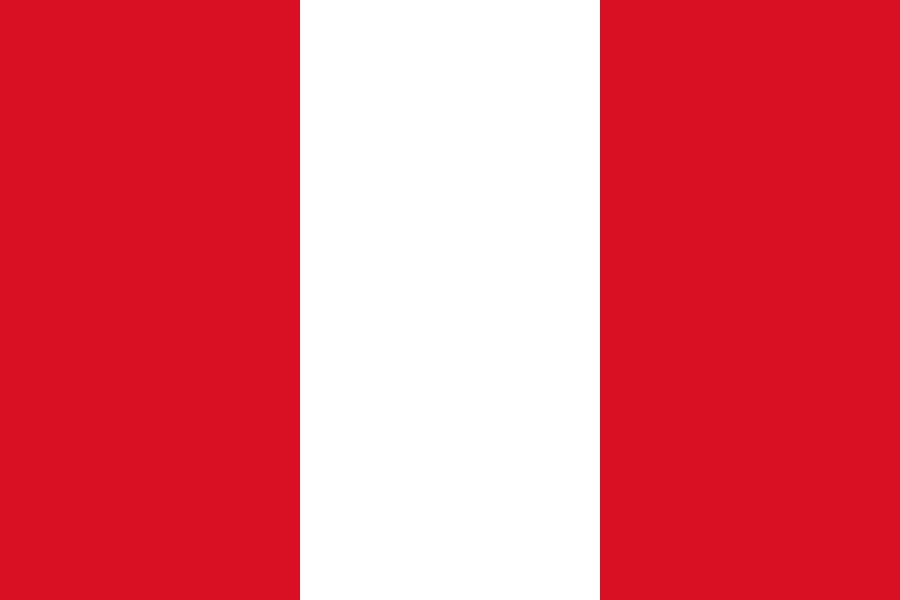
Lima spreads across the desert coast of central Peru, in the valleys of the Rímac and neighbouring rivers, overlooking the Pacific.
Lima is the capital and seat of government of Peru, a role it has held since 1535. Peru itself has an estimated population of 34,576,665 (2025).
Lima is also the largest city in Peru, which is the usual arrangement, though it is far from universal: see the countries where capital and largest city differ.
Lima at a glance
| City population | 10,092,000 (2023) |
|---|---|
| Metropolitan area | 11,283,787 (2023) |
| Country | 🇵🇪 Peru |
| Founded | 1535 |
| Capital since | 1535 |
| Largest city in Peru | Lima |
| Time zone | UTC−05:00 (PET) |
| Currency | Peruvian sol (PEN) |
About Lima
Lima was founded on 6 January 1535 by Francisco Pizarro as the 'City of Kings'.
Lima has been the capital of Peru since 1535, Lima has been a capital since its founding in 1535, as the seat of the Spanish Viceroyalty of Peru and later of the independent republic.
Lima is Peru's largest city and the second-most populous in South America, after São Paulo.
Unusually for such a large city, it sits in a coastal desert and gets very little rain.
City facts sourced from Wikipedia: Lima.
Frequently asked questions
What is the capital of Peru?
Is Lima the largest city in Peru?
What is the population of Lima?
Where is Lima located?
When did Lima become the capital of Peru?
What time zone is Lima in?
What currency is used in Lima?
Capitals of neighbouring countries
See the full profile of Peru on its country page, or browse every capital city.
Capital and country data from open datasets; city and metropolitan populations are hand-curated per city and cited where they are shown. Populations of countries come from the World Bank (SP.POP.TOTL). Full sources and vintage on the data page. Last updated . Report a correction.