What is the capital of Brazil?
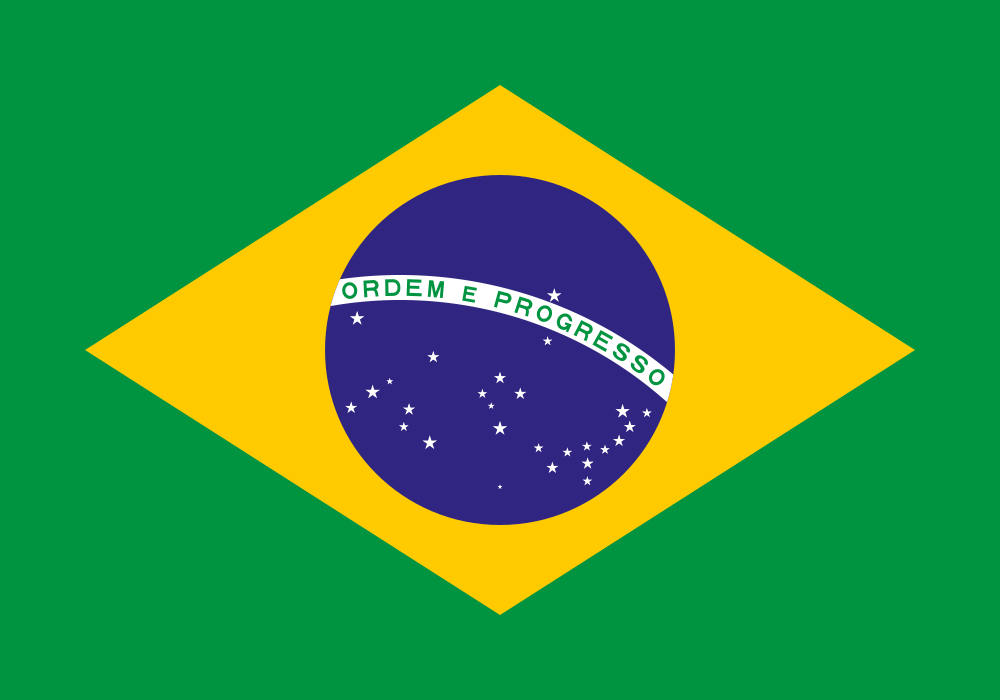
Brasília is a purpose-built planned city on the Brazilian central highlands, at about 1,000 metres elevation, laid out on a plan often likened to an aeroplane or a bird.
Brasília is the capital and seat of government of Brazil, a role it has held since 1960. Brazil itself has an estimated population of 212,812,405 (2025).
Brasília is not the largest city in Brazil. That is São Paulo, which makes Brazil one of the countries whose capital is not their biggest city.
Brasília at a glance
| City population | 2,996,899 (2025 estimate) |
|---|---|
| Country | 🇧🇷 Brazil |
| Founded | 1960 |
| Capital since | 1960 |
| Largest city in Brazil | São Paulo |
| Time zone | UTC−03:00 (BRT) |
| Currency | Brazilian real (BRL) |
About Brasília
Brasília was inaugurated on 21 April 1960 as a purpose-built capital, planned by the urbanist Lúcio Costa and the architect Oscar Niemeyer; its modernist layout is a UNESCO World Heritage site.
Brasília has been the capital of Brazil since 1960, when Brazil moved its capital inland from Rio de Janeiro to the newly built city, part of a deliberate plan to develop the country's interior.
Rio de Janeiro was Brazil's capital from 1763 to 1960, and Salvador was the colonial capital before that, from 1549 to 1763.
Brasília is Brazil's third-largest city; the much larger São Paulo and Rio de Janeiro are not the seat of government.
It was built from open savannah in under four years to shift Brazil's centre of gravity away from the crowded Atlantic coast.
City facts sourced from Wikipedia: Brasília.
Frequently asked questions
What is the capital of Brazil?
Is Brasília the largest city in Brazil?
What is the population of Brasília?
Where is Brasília located?
When did Brasília become the capital of Brazil?
What was the capital of Brazil before Brasília?
What time zone is Brasília in?
What currency is used in Brasília?
Capitals of neighbouring countries
See the full profile of Brazil on its country page, or browse every capital city.
Capital and country data from open datasets; city and metropolitan populations are hand-curated per city and cited where they are shown. Populations of countries come from the World Bank (SP.POP.TOTL). Full sources and vintage on the data page. Last updated . Report a correction.