What is the capital of Israel?
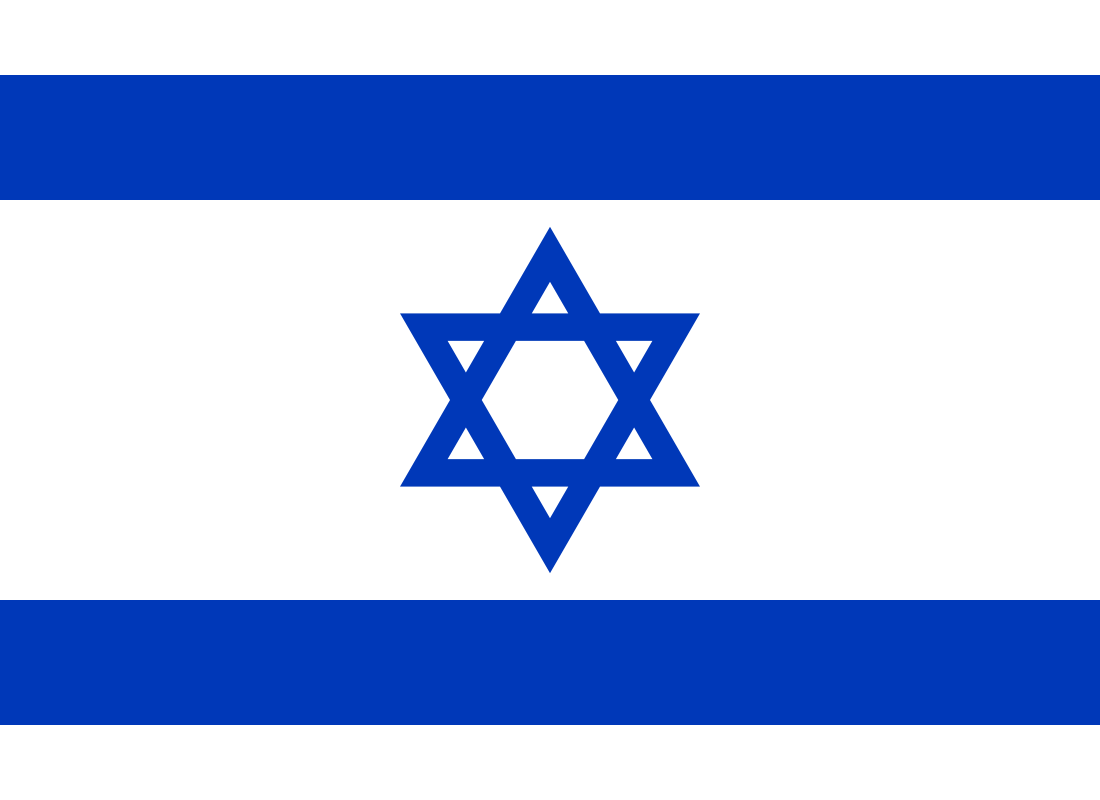
Jerusalem stands on a plateau in the Judaean Mountains of the southern Levant, roughly 754 metres above sea level, between the Mediterranean and the Dead Sea.
Jerusalem is the capital and seat of government of Israel, a role it has held since 1980. Israel itself has an estimated population of 10,122,800 (2025).
Jerusalem is also the largest city in Israel, which is the usual arrangement, though it is far from universal: see the countries where capital and largest city differ.
Jerusalem at a glance
| Country | 🇮🇱 Israel |
|---|---|
| Capital since | 1980 |
| Largest city in Israel | Jerusalem |
| Time zone | UTC+02:00 (IST) |
| Currency | Israeli new shekel (ILS) |
About Jerusalem
Jerusalem has been the capital of Israel since 1980, when the Jerusalem Law declared the whole city the capital of Israel, following Israel's annexation of East Jerusalem in 1967; Israel keeps its main governmental institutions in the city.
The status of Jerusalem is disputed. The international community rejects the annexation of East Jerusalem as illegal and regards it as Palestinian territory occupied by Israel, while the State of Palestine claims East Jerusalem, including the Old City, as its own capital. Jerusalem remains one of the core issues of the Israeli-Palestinian conflict.
Jerusalem is one of the oldest cities in the world and is holy to all three major Abrahamic religions: Judaism, Christianity and Islam.
Under the 1947 United Nations partition plan for Palestine, Jerusalem was to become a corpus separatum, a separately administered entity belonging to neither state.
City facts sourced from Wikipedia: Jerusalem.
Frequently asked questions
What is the capital of Israel?
Is Jerusalem the largest city in Israel?
Where is Jerusalem located?
When did Jerusalem become the capital of Israel?
What time zone is Jerusalem in?
What currency is used in Jerusalem?
Capitals of neighbouring countries
See the full profile of Israel on its country page, or browse every capital city.
Capital and country data from open datasets; city and metropolitan populations are hand-curated per city and cited where they are shown. Populations of countries come from the World Bank (SP.POP.TOTL). Full sources and vintage on the data page. Last updated . Report a correction.