What is the capital of Georgia?
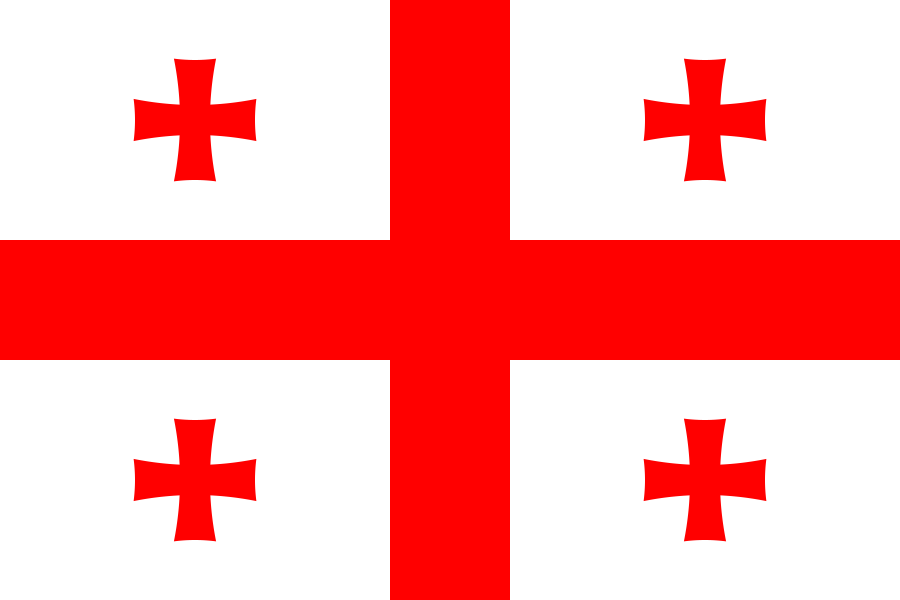
Tbilisi lies on the banks of the Kura River, known locally as the Mtkvari, in the South Caucasus, with the city climbing the surrounding hillsides between about 380 and 770 metres of elevation.
Tbilisi is the capital and seat of government of Georgia, a role it has held since 5th century. Georgia itself has an estimated population of 3,935,766 (2025).
Tbilisi is also the largest city in Georgia, which is the usual arrangement, though it is far from universal: see the countries where capital and largest city differ.
Tbilisi at a glance
| City population | 1,108,717 (2014 census) |
|---|---|
| Country | 🇬🇪 Georgia |
| Founded | 5th century |
| Capital since | 5th century |
| Largest city in Georgia | Tbilisi |
| Time zone | UTC+04:00 (GET) |
| Currency | lari (GEL) |
About Tbilisi
Tbilisi was founded in the 5th century by King Vakhtang I of Iberia; legend links the site to the hot springs he is said to have discovered there.
Tbilisi has been the capital of Georgia since 5th century, Tbilisi has served as the capital of successive Georgian kingdoms and republics since its founding, with interruptions during periods of foreign rule.
The city's name derives from the Georgian word for 'warm', a reference to its many sulphuric hot springs, which still feed its historic bathhouses.
City facts sourced from Wikipedia: Tbilisi.
Frequently asked questions
What is the capital of Georgia?
Is Tbilisi the largest city in Georgia?
What is the population of Tbilisi?
Where is Tbilisi located?
When did Tbilisi become the capital of Georgia?
What time zone is Tbilisi in?
What currency is used in Tbilisi?
Capitals of neighbouring countries
See the full profile of Georgia on its country page, or browse every capital city.
Capital and country data from open datasets; city and metropolitan populations are hand-curated per city and cited where they are shown. Populations of countries come from the World Bank (SP.POP.TOTL). Full sources and vintage on the data page. Last updated . Report a correction.