What is the capital of Saint Lucia?
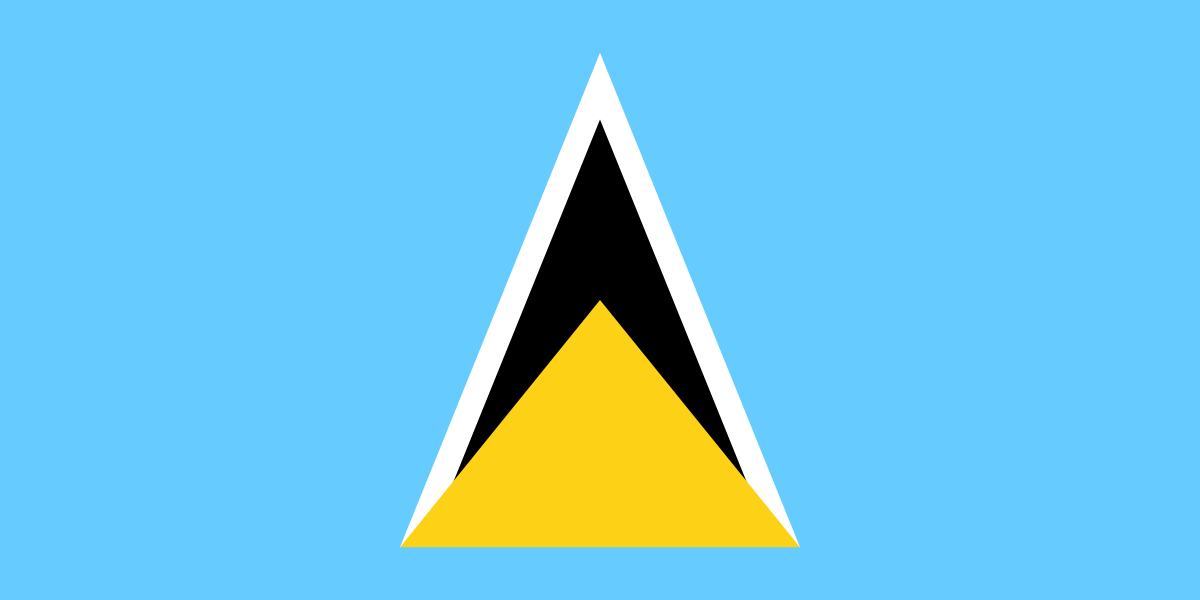
Castries is built on reclaimed land on a flood plain, laid out in a grid around a sheltered harbour that receives cargo vessels, ferries and cruise ships.
Castries is the capital and seat of government of Saint Lucia. Saint Lucia itself has an estimated population of 180,149 (2025).
Castries is also the largest city in Saint Lucia, which is the usual arrangement, though it is far from universal: see the countries where capital and largest city differ.
Castries at a glance
| City population | 20,000 (2013 estimate, urban area) |
|---|---|
| Country | 🇱🇨 Saint Lucia |
| Founded | 1650 |
| Largest city in Saint Lucia | Castries |
| Time zone | UTC−04:00 (AST) |
| Currency | Eastern Caribbean dollar (XCD) |
About Castries
The town was founded in 1650 as Carenage and renamed Castries in 1756.
Castries is the birthplace of two Nobel laureates: Arthur Lewis, winner of the 1979 Nobel Memorial Prize in Economics, and Derek Walcott, winner of the 1992 Nobel Prize for Literature.
The wider Castries district was home to just under 70,000 people as of May 2013.
City facts sourced from Wikipedia: Castries.
Frequently asked questions
What is the capital of Saint Lucia?
Is Castries the largest city in Saint Lucia?
What is the population of Castries?
Where is Castries located?
What time zone is Castries in?
What currency is used in Castries?
See the full profile of Saint Lucia on its country page, or browse every capital city.
Capital and country data from open datasets; city and metropolitan populations are hand-curated per city and cited where they are shown. Populations of countries come from the World Bank (SP.POP.TOTL). Full sources and vintage on the data page. Last updated . Report a correction.