What is the capital of Maldives?
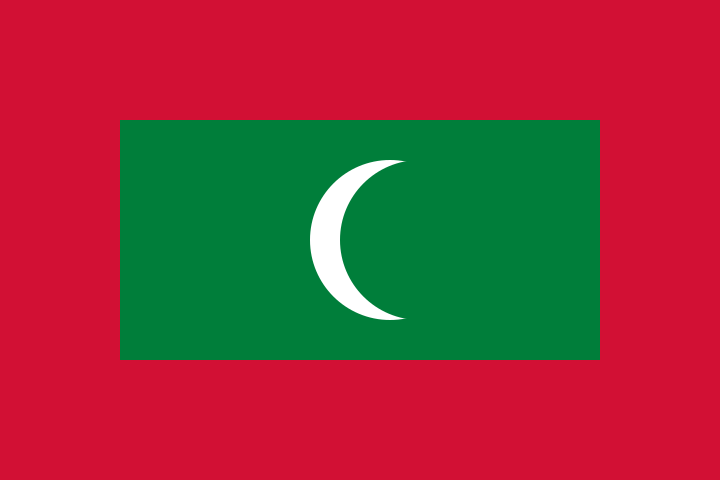
Malé sits on the southern edge of North Malé Atoll (Kaafu Atoll), and with 211,908 people on 8.30 square kilometres it is one of the most densely populated cities in the world.
Malé is the capital and seat of government of Maldives. Maldives itself has an estimated population of 529,676 (2025).
Malé is also the largest city in Maldives, which is the usual arrangement, though it is far from universal: see the countries where capital and largest city differ.
Malé at a glance
| City population | 211,908 (2022 census) |
|---|---|
| Country | 🇲🇻 Maldives |
| Founded | 5th century |
| Largest city in Maldives | Malé |
| Time zone | UTC+05:00 (MVT) |
| Currency | Maldivian rufiyaa (MVR) |
About Malé
Malé was founded in 5th century.
Malé was traditionally the King's Island, from which the ancient royal dynasties ruled; it was once a walled city of forts and gates, remodelled after the monarchy was abolished in 1968.
The city consists of a central island, an airport island and five other islands presided over by the Malé City Council.
In recent decades the island has been considerably expanded through land reclamation.
City facts sourced from Wikipedia: Malé.
Frequently asked questions
What is the capital of Maldives?
Is Malé the largest city in Maldives?
What is the population of Malé?
Where is Malé located?
What time zone is Malé in?
What currency is used in Malé?
See the full profile of Maldives on its country page, or browse every capital city.
Capital and country data from open datasets; city and metropolitan populations are hand-curated per city and cited where they are shown. Populations of countries come from the World Bank (SP.POP.TOTL). Full sources and vintage on the data page. Last updated . Report a correction.